The Humorists
A chat with Isaac Chotiner about comedy under authoritarianism

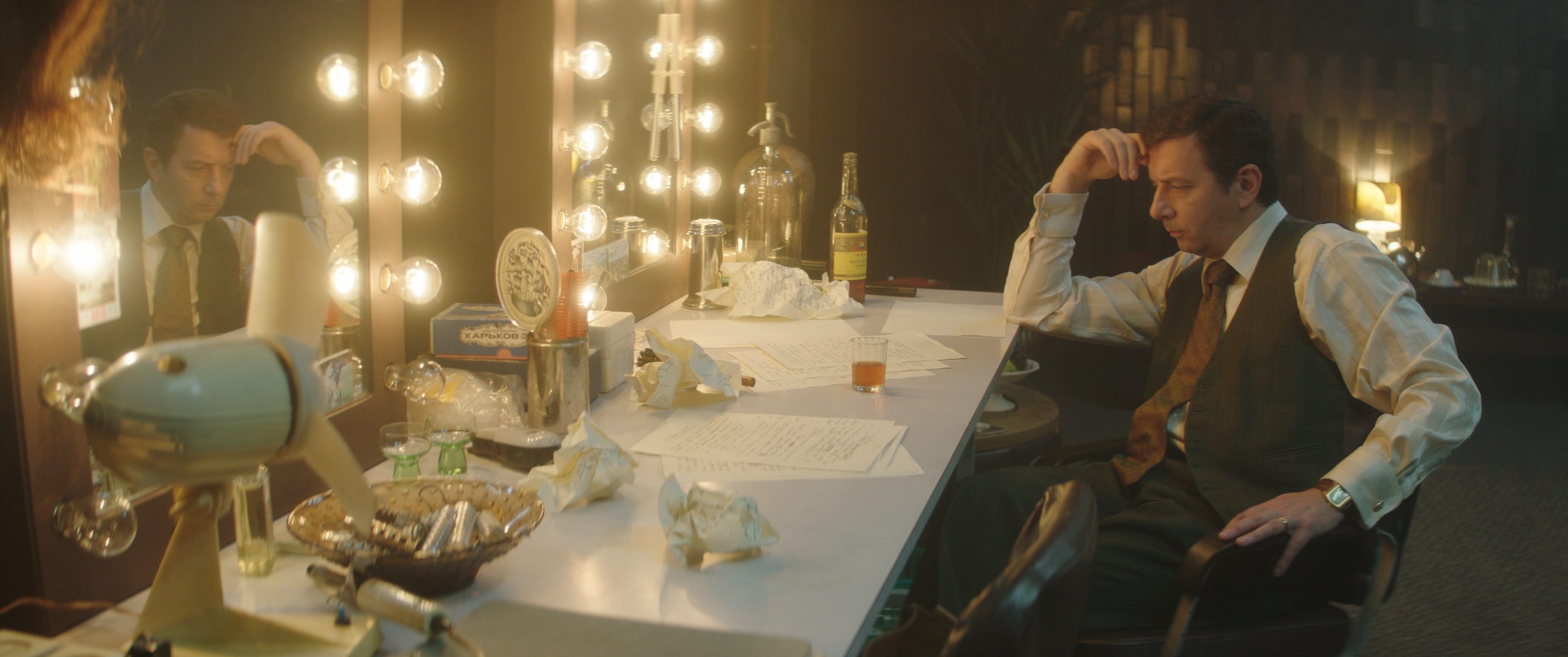
The topic of humor in an unfree society has pursued me my entire life. Though my own parents were not in any creative field, I grew up alongside kids of several well-known Soviet comics; it may have had something to do with the fact that the comedy scene in the USSR was heavily Jewish. Years later, I chopped these memories up with my firsthand experiences of encroaching censorship in Putin-era Russia, and shaped the result into the fictional figure of Boris Arkadiev, the antihero of my first feature.
Made in 2018 and set in 1984, The Humorist owed a lot to Mephisto. István Szabó’s great 1981 film is based on a real story of a theater actor who deludes himself into thinking that his status as the Nazis’ favorite plaything will help him save his less fortunate friends from the camps. (It does not). What interested me was not the selfless struggle of an artist against the state, but the mechanics of compromise and what it does to a soul. There was a meta touch to it, too: about ten percent of this internationally filmed, vehemently anti-Soviet film’s budget came from Russia’s own Ministry of Culture. Back then, this kind of thing was still possible.
Skip forward four more years, and compromise was no longer an option: the full-scale invasion of Ukraine forced the best and brightest minds in Russian-language comedy to leave the country or face a real possibility of prison. Having cut all ties with Russia, in late 2022 I co-created Votvot, a free streaming platform financed by Radio Free Europe and devoted to amplifying banned Russophone content. (Its unofficial slogan was “If the Kremlin Hates It, We Have It.”) Votvot’s biggest hits were invariably standup specials by young talented comedians in exile: Ariana Lolaeva, Denis Chuzhoi, Idrak Mirzalizade, Kristina Bitkulova, and many others.
Ironically, it was the incoming U.S. administration that put a stop to this endeavor. In the spring of 2025, a brigade of DOGE goons rolled through the Radio Free Europe offices, and the project came to an end. Now, of course, it’s time for America’s own satirists to start making their own compromises with the system. The question is, who will be their Votvot if and when the repression machine reaches full speed.
The New Yorker’s Isaac Chotiner was kind enough to reach out and chat with me about all of this. Our conversation has been edited very lightly, and I must warn that I’m a bit of a messy extemporaneous speaker, but it was a great chance to organize my thoughts on the last few weeks’ events. Here’s one more point I wish I’d made in the interview: the precise way in which Jimmy Kimmel’s show has been brought down is extremely Russian. A government official (FCC’s chairman Brendan Carr) pairs up with a supposedly private actor (right-wing podcaster Benny Johnson) to issue an unofficial, deniable, but unambiguous threat (“We can do this the easy way or the hard way”), forcing Disney’s hand by targeting ABC’s local affiliates first.1 That is exactly how Putin’s system operates: not by direct edict from on high, as a true dictatorship might, but by weaponizing existing market levers and choreographing the very outrage to which it then pretends to respond.
Joe Adalian over at Vulture has an excellent play-by-play of the tactics that led to this.